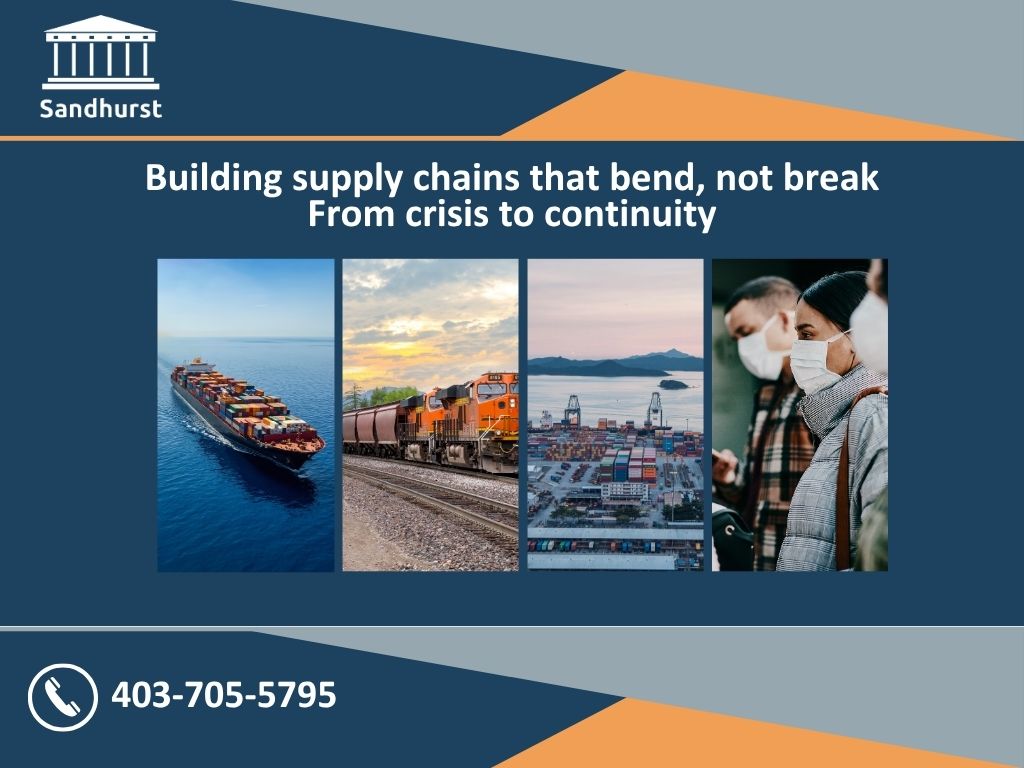
Globalization has unlocked extraordinary efficiencies: lower costs, faster production cycles, and access to worldwide talent and materials. But the same interconnectedness that powers modern commerce also exposes supply chains to a wider range of vulnerabilities. When a disruption occurs in one region, its ripple effects can travel across continents in hours. For organizations that depend on just‑in‑time logistics or geographically concentrated suppliers, the margin for error has never been thinner.
Today’s supply chains are more fragile for several reasons:
- Geographic dispersion means that a single weak link, whether a port, a factory, or a shipping lane, can halt production globally.
- Lean inventory strategies reduce buffers that once absorbed shocks.
- Complex supplier networks make it harder to identify and mitigate upstream risks.
These vulnerabilities become especially visible during high‑profile disruptions. The current tensions affecting the Strait of Hormuz, for example, highlight how critical maritime chokepoints are to global trade. It’s clear that any instability in such a narrow and heavily trafficked corridor can slow shipments, increase insurance costs, and force companies to rethink routing strategies.
We’ve seen this pattern before. The COVID‑19 pandemic exposed how dependent industries were on single‑region manufacturing hubs. Shortages in semiconductors, PPE, and raw materials demonstrated how quickly global supply chains can seize up when borders close or factories shut down. Similarly, the 2021 Suez Canal blockage, showed how a single incident in a single waterway could delay billions of dollars in goods and disrupt schedules for months.
Building supply chains that bend, not break
These events aren’t anomalies; they’re reminders. The question for businesses isn’t whether disruptions will occur, but how prepared they are when they do. Building resilience isn’t about predicting every possible disruption, it’s about designing supply chains that can absorb shocks, adapt quickly, and continue operating under stress. Business continuity planning is the framework that makes this possible.
Here are key actions organizations can take:
- Map and monitor the entire supply chain: Many companies only understand their Tier 1 suppliers. True resilience requires visibility into Tier 2, Tier 3, and beyond. This includes identifying geographic concentrations, understanding single points of failure, and monitoring supplier health and performance. This helps to ensure visibility, which enables faster decision‑making when disruptions occur.
- Diversify suppliers and logistics routes: Relying on a single supplier or region increases exposure. Organizations should develop multi‑sourcing strategies, build relationships with alternative suppliers, and pre‑plan secondary logistics routes. Diversification spreads risk and reduces dependency on any one node.
- Build strategic inventory buffers: Lean inventory is efficient, until it isn’t. Strategic stockpiles of critical components can prevent production stoppages during disruptions. Conducting a Business Impact Analysis can help identify what supplies require additional buffers to ensure operations can withstand disruptions.
- Invest in real‑time data and predictive tools: Modern supply chains move too fast for manual monitoring. Companies can benefit from real‑time shipment tracking, predictive analytics for demand and disruption forecasting, and automated alerts for delays or anomalies.
- Conduct scenario planning and stress tests: Organizations should regularly test their supply chains against realistic scenarios including port closures, supplier insolvency, transportation bottlenecks, and sudden demand spikes. Conducting an exercise can help reveal weaknesses before they become crises.
- Integrate business continuity into corporate culture: Resilience isn’t just an operations issue. It requires alignment across departments including procurement, finance, emergency management, risk management, and Executive leadership. When continuity planning becomes part of the organizational mindset, responses become faster, more coordinated, and more effective.
From crisis to continuity
Strengthening supply chain resilience requires a shift from reactive crisis management to proactive continuity planning. That means diversifying suppliers, investing in real‑time visibility tools, building strategic inventory reserves, and developing contingency logistics routes. It also means fostering cross‑functional collaboration so that procurement, operations, finance, and risk teams can respond in sync rather than in silos.
Disruptions will continue, whether from geopolitical tensions, natural disasters, cyber incidents, or unexpected global events. Organizations that treat resilience as a competitive advantage, not just a defensive measure, are better positioned to maintain customer trust, protect revenue, and adapt to whatever comes next.
If your organization is ready to strengthen its supply chain continuity and build a more resilient future, contact Sandhurst Consulting to begin developing a comprehensive business continuity plan tailored to your needs.