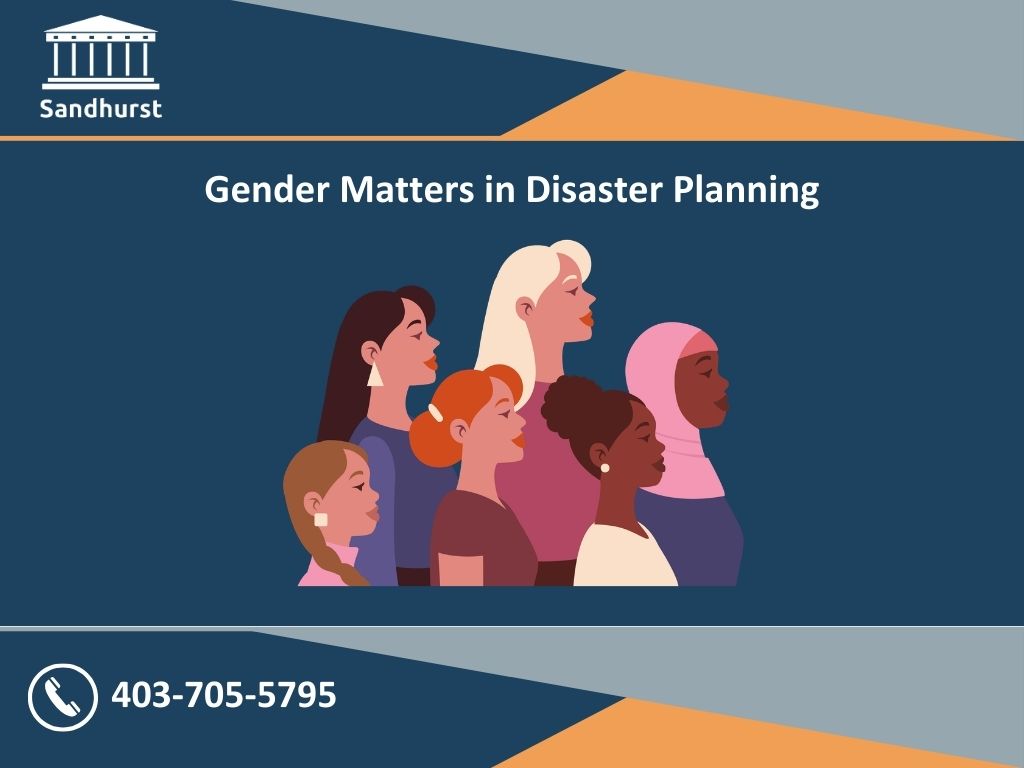
Disasters do not fall evenly across populations. For emergency management professionals charged with preparedness, response, and recovery, recognizing how disasters uniquely affect women is not an exercise in compassion alone, it is essential to effective risk reduction and operational success. Peer‑reviewed evidence shows that gendered pathways shape exposure, vulnerability, and recovery in ways that demand targeted, intersectional action.
Why women’s needs should drive emergency planning ?
One of the most consistent findings in the literature is the link between disasters and an increase in gender‑based violence. As one review concluded, “Disasters disproportionately impact women and girls, with some evidence suggesting that violence against women and girls (VAWG) increases in disaster settings.” This rise is driven by multiple, interacting factors common to disaster contexts including displacement into crowded or insecure shelters, breakdowns in policing and social services, and heightened economic stress that can exacerbate household tensions.
Reproductive and maternal health is another domain where disaster effects are both immediate and long‑lasting. Disruptions to antenatal care, supply chains for contraception, and facility‑based delivery services translate into measurable increases in maternal morbidity and adverse birth outcomes. A recent scoping review asked whether existing conceptual frameworks fully account for these pathways and found important gaps in how maternal health is represented in disaster research and planning.
Why many plans still fail operationally ?
Economic impacts compound these health and safety risks. Evidence from the COVID‑19 pandemic and other crises documents that women’s employment and income often decline more sharply and recover more slowly than men’s, in part because women shoulder a disproportionate share of unpaid care and informal work. These economic setbacks reduce household resilience and constrain options for relocation, rebuilding, or accessing services.
Despite growing evidence, emergency plans frequently remain gender‑blind or treat gender as a checklist item. A review of several national and subnational preparedness documents found limited integration of gendered risk, inadequate provisions for gender‑based violence services, and sparse attention to reproductive health continuity. Where gender is acknowledged, it is often framed in terms of generalized vulnerability rather than as a set of specific, actionable risks and capacities that vary across subpopulations. Operational consequences follow:
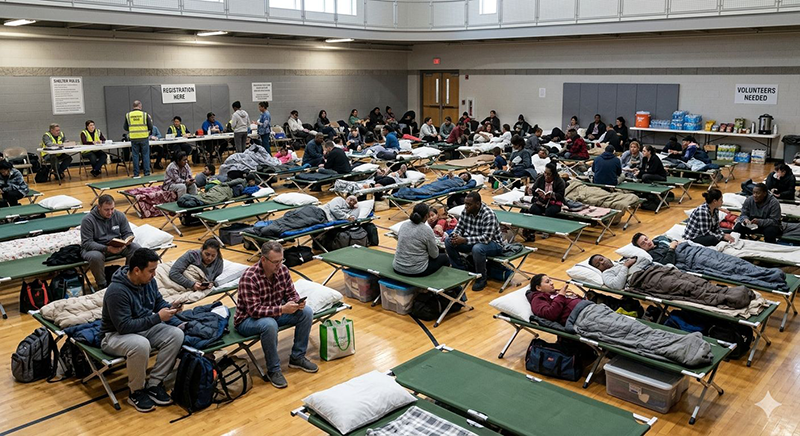
- Shelters without separate, secure spaces for women and families increase safety risks.
- Logistics plans that omit reproductive health commodities create preventable morbidity.
- Recovery programs that ignore women’s caregiving burdens fail to restore livelihoods equitably.
These are not abstract failures; they are predictable outcomes of planning that does not incorporate gendered evidence.
Practical shifts for emergency management
Translating evidence into practice requires three interlinked shifts:
- Data and assessment: Routine collection of sex and gender data, combined with indicators that capture intersecting vulnerabilities, should inform hazard maps, evacuation planning, and needs assessments.
- Core services in response: Survivor‑centred Gender-Based Violence (GBV) services, reproductive health supplies and referral pathways, and mental‑health supports must be budgeted and operationalized as core components of response, not optional add‑
- Leadership and participation: Women’s groups, including those representing marginalized identities, are often first responders, knowledge holders, and trusted members of a community. Embedding their leadership in planning and recovery improves relevance and uptake of interventions.
Each shift has operational implications including revising standard operating procedures to include GBV referral protocols, pre‑positioning reproductive health kits in high‑risk area, training shelter managers on safety and privacy, and ensuring needs assessments account for intersectional differences across gender, age, disability, and migration status.
Measuring success differently
Success metrics should move beyond number of people served to include indicators of equity; this could include reductions in barriers to accessing reproductive care, timely access to GBV services, restoration of women’s livelihoods, and representation of women from diverse backgrounds in recovery decision making. These measures align humanitarian outcomes with resilience goals and make equity operational rather than symbolic.
When plans account for the specific safety, health, and economic pathways that affect women differently, and when they recognize how gender intersects with other identities, responses are more equitable and more resilient. For emergency managers, integrating an intersectional gender lens is not optional; it is a catalyst for an effective response.
Citations:
Crawford, T., Chang, K.J., Nila, F., Subramaniam, P., Bethune, L., Parkinson, D., Villeneuve, M. (2023). Disabilities, The Intersectionality of Gender, Sexual Identity, and Disability in Disaster Risk Reduction in OECD Countries: A Rapid Scoping Review.
Flor, L.S., Friedman, J., Spencer, C.N., Cagneya, J., Arrieta, A., Herbert, M.E., Stein, C., Mullany, E.C., Hon, J., Patwardhan, V., Barber, R.M., Collins, J.K., Hay, S.I., Lim, S.S., Lozano, R., Mokdad, A.H., Murray, C.J.L., Reiner, R.C., Sorensen, R.J.D., Haakenstad, A., Pigott, D.M., Gakidou, E. (2022). The Lancet, Quantifying the effects of the COVID-19 pandemic on gender equality on health, social, and economic indicators: a comprehensive review of data from March, 2020, to September, 2021.
Muñoz-Nieves, C., Greaves, L., Huber, E., Brabete, A.C., Wolfson, L., Poole, N. International Journal of Environmental Research and Public Health, Sex and Gender Influences on the Impacts of Disasters: A Rapid Review of Evidence.
Schulte, C., Erhardt-Ohren, B., Prata. N. (2025). PLOS Climate, A scoping review of natural disasters, environmental hazards, and maternal health: Are all potential outcomes accounted for in conceptual frameworks?
Thurston, A.M., Stöckl, H., Ranganathan, M. (2021). BMJ Global Health, Natural hazards, disasters and violence against women and girls: a global mixed-methods systematic review.